When I teach PR campaigns I often do an exercise with students to match them into ages and get them to talk about their likes and their dislikes. The purpose? To get them to understand that just because they share an age group, doesn’t make them the same.
A paper by Van den Bergh et al. in Young Consumers highlighted the importance of segmentation in their study looking at the Gen Z population in Europe, the USA and Australia. Through an online survey the study explored differences within the age group and across countries based on their brand and lifestyle preferences.
The reason this paper stuck out is due to my experience in seeing a gap between communication and PR academia and practice in the use of segmentation. Whilst market research is often used – the budget that is needed to conduct market or segmentation research is substantial, meaning it is often only used for larger campaigns or strategies.
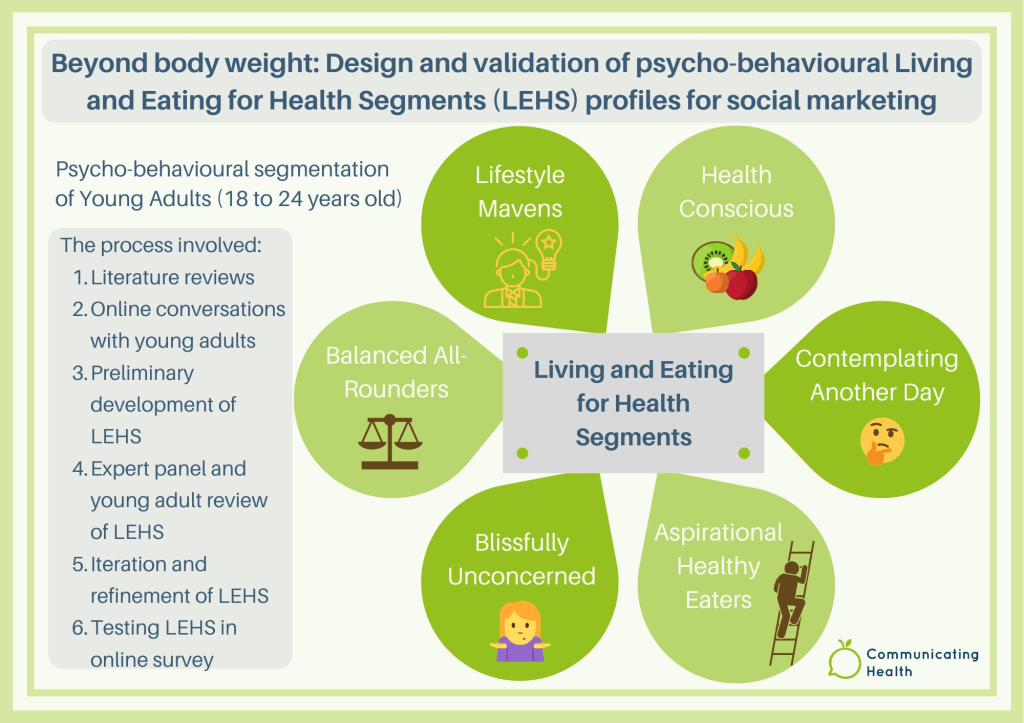
Segmentation has been explored in a number of different contexts – commercially, in practice and in academia. For example, Brennan et al. (2020) explored the dietary behaviours of young people to develop the Living and Eating for Health Segments (LEHS). The LEHS were part of a broader research project aimed at supporting health professionals to communicate health to young people. Check out the Communicating Health Toolkit for further information.
Similarly, the Morris Hargreaves McIntyre Culture Segments segment how communities engage with arts and culture. Many government cultural institutions use localised research based on the Culture Segments to create state or country culture profiles, and make the research available for free to arts organisations.
What this research identifies is the power in using psychographic segmentation in going beyond demographic data to understand your audience. By understanding their lifestyles, interests, values, attitudes and personalities you can create strategies, content and campaigns that speak directly to their motivations and aspirations – ultimately it helps you create a deeper emotional connection with your content.
Key take outs
- Segment your audiences – Incorporate segmentation into your target audience planning.
- Build on research – Don’t reinvent the wheel on segmentation. If you don’t have budget for your own research, check out publicly available segments and use research repositories to get an insight into segmentation studies that may be relevant for you.
- Incorporate segments into your strategy – Identifying segments is a first step but make sure they carry through into your strategy. Create tailored messaging, use channels that are relevant to your segments and, most importantly, evaluate your strategy based on your segments.
Links
- Creative Australia: The National Arts Participation Survey: Culture Segments Australia.
- Communicating Health Toolkit: Segmentation.
- Case study: Living and Eating for Health Segments.

 Dr David Micallef
Leave a comment